Greetings from 'The King of Castle Rock'

Welcome to a special world, centered around the small town of Castle Rock. A place hidden in the darkness of evil. This world is filled with colorful characters and touching stories of hope and survival. Their homes spread across the land to places like Derry, Jerusalem's Lot, and worlds beyond our ability to imagine, waiting for us to explore them. All of this vast empire is ruled by one man, its creator, Stephen King. This blog is about the work of the undisputed 'Master of Horror', from the literature to the process. Enjoy your journey through the world that Stephen King built, and rules!


Sunday, April 8, 2012

Derry: A Town of Unspeakable Evil, Part 2

Derry, Maine: A Town of Unspeakable Evil
Part 2 – 1958 to 1998

In the first installment of this profile of Derry, I discussed the town, its history, and a few of its famous residents. Now I will discuss events that have been documented in King’s stories. Derry plays a significant role in the world that King has built. Due to the number of stories that take place in Derry, this will be a three-part series.


One event that must be discussed covers a time span from 1958 to 1985.  In 1958, children in Derry were disappearing or being killed at an alarming rate.  One of these victims was Georgie Denbrough who was killed while playing with a paper boat that his brother Bill made for him. Bill Denbrough and six of his friends created a club called “the Losers Club” while playing in the Barrens where they spent their childhood afternoons building a dam in the creek that flows through it.  The boys become convinced, due to things that they saw and experienced, that an evil murderer was stalking their hometown.  In 1958, they track the “murderer” into the sewers to exact revenge and stop the murders.  They believed that they were the only ones who could stop the murderer.


The Losers Club

In 1985, children started to disappear and be murdered again; This was also the same year of the Great Flood in Derry, which did damaged the city extensively and cost millions to repair. Mike Hanlon, the city librarian and a member of the Losers Club, contacted all of his childhood friends about the recent activity. They had made a promise as children to return if the murders started again.  Six of the seven members returned to Derry and faced the child-killing monster again.  In the course of their stay in Derry, Mike Hanlon was stabbed and one of their friends was killed. (For more about these events, see IT, 1986)

IT was inspired by the classic Norwegian fairy tale “The Three Billy Goats Gruff,” according to The Complete Stephen King Universe.

In 1994, Derry resident Ralph Roberts begins a descent into a type of madness created by insomnia and the loss of his first wife, Carolyn.  Ralph, who is a senior citizen, begins to see strange people-like beings that he calls “the little bald doctors.”  Ralph develops a sixth sense that allows him to see the auras of people around him.  One of the hardest things about Ralph’s newly developed abilities is the way that he can see death hanging over someone’s head.  Ralph described it as being able to see a “black balloon” over their heads.  This is not a pleasant gift to have in the town of Derry because death is a daily occurrence.

Ralph Roberts also develops the ability to know evil when he sees it.  Ralph decides that he must take action when he learns that his neighbor, Ed Deepneau, is planning an assault on the Derry Civic Center where Susan Day, a pro-choice activist, is speaking.  A mysterious force known as the Crimson King is manipulating Deepneau’s thoughts and wants the man to kill a child named Patrick Danville, who has an important place in history.  (To read about Ralph Robert’s life, see Insomnia, 1994).

To promote the release of Insomnia, Stephen King made a ten-stop tour of independent bookstores across the United States on his Harley-Davidson motorcycle. This trip helped inspire two novels, Desperation and The Regulators, which were released in 1996.
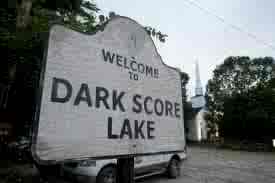
In 1998, Mike Noonan, a best-selling novelist who calls Derry home, finds his life changed in a significant way.  Noonan’s wife, Jo, dies from an aneurysm that occurs when she is expecting their first child.  Noonan becomes emotionally distraught and finds it difficult to pen another story.  He decides to leave Derry for a while and stay at their summer home at Dark Score Lake.  The home is called “Sara Laughs.”  The author believes that the writer’s block may be broken by staying at his summer home.


Mike Noonan (portrayed by Pierce Brosnan)

While staying near Dark Score Lake, Noonan becomes involved in a couple of different events.  He rescues a child from the street and then finds himself in the middle of a custody battle between the child’s mother, Mattie Devore, and her father-in-law, millionaire Max Devore. Noonan also begins receiving messages in various ways from spirits, one of which he believes to be his deceased wife. He also starts to investigate the possibility that his wife had an affair prior to her death.  The truth was much darker.  His wife had been investigating the rape and murder of a Jazz singer named Sara Tidwell that occurred nearly a century earlier. (Mike Noonan’s story can be found in Stephen King’s Bag of Bones, 1998)

Bag of Bones was adapted for television in 2011 and aired on A&E.  Stephen King read the audio version of this novel.

To Be Continued...


Thursday, April 5, 2012

New Promo for The King of Castle Rock

This is the new promo for the King of Castle Rock Blogger and Facebook sites. This promo covers fourteen of King's most memorable works. Check it out and let me know what you think. TB


Monday, March 26, 2012

More Tips on Writing from King:

More Tips on Writing from King:
Inspiration and Good Writing


As I stated in the introduction, this blog will focus on King’s process of writing, as well as his body of work. Granted, there will ultimately be more articles on his body of work than the process itself.  Why?  He uses the same process with each of his pieces. However, it is important to understand that process in order to gain more from the exploration of his work. Being able to understand his process also provides important advice for our own attempts at penning an original piece, if that is the goal.

The first step is to understand that writing, in all forms, is indeed art.  Therefore, all writers are artists.  It doesn’t matter what the medium of the writer is; the finished product is still art.  It may be hard to imagine a newspaper story as art, but it is a product created from the mind and skills of the writer.  King considers writing to be the highest form of art.  In On Writing, King writes, “All the arts depend upon telepathy to some degree, but I believe that writing offers the purest distillation” (103).

One thing to remember about writing or anything else that one attempts to do, it is important to be dedicated to the project. Some might think being a comedian or a rodeo clown is having fun at work all day, and it might be. Many people have fun at work, but it is still work. Comedians and rodeo clowns work hard at their jobs. However, just because someone is having fun does not mean that they don’t take their job seriously.  This is an important point that King makes about writing, and reading his memoir about writing: 

“But it’s writing, damn it, not washing the car or putting on eyeliner. If you can take it seriously, we can do business. If you can’t or won’t, it’s time for you to close the book and do something else” (107).

The hardest thing that writers, regardless of their experience, struggle with in the process is trying to determine if what they have produced is worthy of an audience.  As a writer, I have penned a few novels and more than a few short stories that I felt was a waste of time when I finished.  It is not uncommon for writers to even quit in the middle of a story due to what King refers to as “fear.”  The fear of writing a bad story can be more crippling than any monster in a King story.  King wrote the following about that fear:

“Good writing is often about letting go of fear and affectation. Affectation itself, beginning with the need to define some sorts of writing as “good” and other sorts as “bad,” is fearful behavior. Good writing is also about making good choices when it comes to picking the tools you plan to work with” (128).

Another issue that writers face is finding that inspiration or story idea for the next top seller that they hope to pen.  King, like many successful writers, is often asked how they came up with an idea for a story.  Some may believe that these ideas are part of a magical blueprint of writing.  King assures us that there is no such formula for generating ideas.  He wrote the following about the origins of his own ideas:

“Let’s get one thing clear right now, shall we? There is no Idea Dump, no Story Central, no Island of the Buried Bestsellers; good story ideas seem to come quite literally from nowhere, sailing at you right out of the empty sky: two previously unrelated ideas come together and make something new under the sun. Your job isn’t to find these ideas but to recognize them when they show up” (37).

King has said many times that the key to writing is just doing it.  You can’t be a “writer” if you don’t write.  You also can’t write in a place that is a hub of activity.  Writing is a personal thing that requires isolation of body and mind to do it successfully. King recommends the following advice for beginning the writing process:

“It starts with this: put your desk in the corner, and every time you sit down there to write, remind yourself why it isn’t in the middle of the room. Life isn’t a support system for the art. It’s the other way around” (101).

So let go of those debilitating fears, push the desk in the corner, grab those ideas that have landed in your lap, and start writing.  Who knows what may come of it!  I assure you that the results will be satisfying on so many levels. As a friend posted in the comment section of an earlier article – Write on!


Sunday, March 25, 2012

The Castle Rock Players - Episode 3

The Castle Rock Players
Episode 3: David Morse


David Morse is a powerful force on the screen, but his delivery is smooth and reserved in a “whiskey” voice that captures the attention of every audience member.  His towering stature at six feet-four inches makes him a perfect candidate for a role that demands a larger-than-life performance.  Morse’s trademark blue eyes combined with his extraordinary acting skills allow the viewer to feel his emotions whether he speaks or not.  These traits make him a memorable person in any work, but he has brought flesh-and-blood life to characters that King created in words.  David Morse has starred in three adaptations of Stephen King’s work.  


Mark Lindsay Chapman and
David Morse in The Langoliers

In 1995, Morse played the role of Captain Brian Engle in the television miniseries adaptation of The Langoliers, based on the short story of the same name that was originally published in Four Past Midnight (1990). As Capt. Engle, Morse plays the role of an airline pilot that is catching a ride on the jet where the characters find themselves caught between the worlds of today and yesterday.  Morse is easily able to sell the character of a typical guy who finds himself thrust into a position of leadership due to his work and circumstances.  Morse delivers valiantly as a character struggling between a necessity to lead and a skeptic who is puzzled by his newfound surroundings.


Tom Hanks and Morse
in The Green Mile

Morse’s next King role would be in one of the most critically acclaimed films of the author’s work, The Green Mile (1999).  Morse was the second person to sign on to the production, according to IMDB.com’s profile of the actor.  He would portray prison guard Brutus “Brutal” Howell, who is the second in command to Tom Hanks’ character. Morse described the script as “very emotional” and that it left “everyone that read it weeping.”  His tall height and commanding appearance made this role an ideal fit for the popular actor, though he would be miniaturized on screen by co-star Michael Clarke Duncan, who played John Coffey (“Like the drink, but not spelled the same”).  The cast was nominated for a Screen Actor Guild Award for “outstanding performance” by an ensemble cast in a motion picture. 


Morse as Adult Bobby Garfield

Just two years later, Morse would once again take on the role of a Stephen King character in Hearts in Atlantis, based on the novella in the collection of the same name.  Morse would portray Bobby Garfield as an adult, a central character in the story.  The novella tells the story of a boy and the friendship that he forges with a mysterious stranger (portrayed by Sir Anthony Hopkins) who stays a few months in the boarding house that Garfield’s mother operates.  Though Morse’s role is significant to the plot, his on-air time was minimal in the film, since much of it occurs when his character is a child, portrayed by Anton Yelchin.  His performance is incredible, and the film builds upon that performance.


There is no doubt that David Morse has earned his spot among those listed in “The Castle Rock Players.”  Since Morse is a popular choice for King, it is possible that we have not seen the last of this fine actor in future films and television adaptations.

New Motion Picture Anthology Announced

In a discussion on The King of Castle Rock Facebook page, several King fans mentioned that they would like to see a new motion picture adapted from his short stories.  Apparently, others want to see this happen too.

This past week, StephenKing.com announced a new motion picture deal that will feature an anthology of four short stories, entitled Stephen King's The Reaper's Image.  The new film will be directed by Mark Pavia.  It will contain the following short stories:

"The Reaper's Image" is a short story that was first published in Startling Mystery Stories in 1969 and collected in Skeleton Crew in 1985. The story is about an antique mirror haunted by the visage of the Grim Reaper, who appears to those who gaze into it.

"Mile 81" is a novella that was released exclusively as an e-book on September 1, 2011. The story is set at a roadside stop at Mile 81 on the Maine Turnpike, where people disappear without a trace. An old wagon is on display at the stop, which draws the attention of all visitors.

"N." is a short story from Just After Sunset (2008).  This short is a story about a woman named Sheila who writes a friend about the death of her brother Johnny Bonsaint, a psychiatrist.  Sheila believes her brother's suicide is connected to his treatment of a patient only referred to as "N." Both deaths are connected to a field where a formation of smooth stones appear to be a portal between this world and another.

"The Monkey" is a short story that was first published in Gallery magazine in 1980, and then revised before being included in Skeleton Crew (1985).  In this story, a cymbal-banging monkey is possessed by evil, which kills any living thing near when it starts to play.

StephenKing.com reports that two of the stories were selected by King and two by Pavia. King's official website says, "the project is a solid mix of classic and contemporary King tales sure to please the Constant Reader." 

We will all eagerly wait for more news on this exciting film.

Derry, Maine: A Town of Unspeakable Evil (Part 1)

Derry, Maine: A Town of Unspeakable Evil
Part 1 – Intro and History

In Stephen King’s world, evil lurks in the darkness, balanced with a sliver of good that prevents it from engulfing everything in its path.  However, Derry is a different kind of town, a place where evil is so entrenched that most of the residents are not even aware of its presence.  Derry looks like every typical American town with average citizens and a Norman Rockwell picturesque setting.  It could be Anywhere, USA; but it is not! 

Derry has a town square where the courthouse and surrounding shops compose the community’s center of activity and life.  Popular local stores provide all the necessary commodities of life and the gossip that small American towns seem to use as fuel for life.  Mr. Norbert Keene’s drugstore located near the square is the place where most residents of Derry fill their prescriptions and doctor their ailments.  The Derry Public Library is close to the center of town and is an important setting in the events that occur in the little town.

Outside of the square, Derry has several famous landmarks that everyone in town knows, and some that they go out of their way to avoid.  Kitchener Iron Works is part of the town’s history and an important business for Derry residents as well as Stephen King’s stories.  On the outskirts of town is the infamous place known as “The Barrens,” which is where the runoff water from the town streets eventually flows.  “The Standpipe” is located in Derry Memorial Park, which is “within a shout” of the Barrens, as described by Mike Hanlon in his unpublished book, Derry: An Unauthorized Town History (IT, page 149).  Derry also has a tall statue of Paul Bunyan and Babe, the Big Blue Ox, which are fictional characters from American folklore. One of the most recent landmarks in Derry is a statue dedicated to the memory of the “lost children” of the town (Dreamcatcher).  

Derry has a tragic and dark history that is reflective upon the evil that lives in the small New England town.  This history is the focus of Mike Hanlon’s book that is mentioned in the previous paragraph.  Here are some of the events that Hanlon retells in his book:

          1741 – The entire population of Derry township vanishes. Hanlon
          compares it to the Roanoke Island, Virginia colony, where all of
          the colonists disappeared in the early settlement of North America.

1851 – John Markson kills his entire family with poison, then consumes a deadly “white nightshade” mushroom.

1879 – A crew of lumberjacks find the remains of another crew that spent the winter snowed in at a camp in the upper Kenduskeag, at the tip of the modern-day barrens. All nine had been hacked to pieces.

1906 – On Easter Sunday, the Kitchener Ironworks explodes during an Easter egg hunt, resulting in 102 deaths.

1930 – The Black Spot, a Negro social club, is burned to the ground by the Maine Legion of Decency. Dozens perish.

1958 – One hundred and twenty-seven children, ranging in age from three to nineteen, were reported missing in Derry.

1985 – Nine children are murdered; their killer is never apprehended. Also the year of the “Great Flood,” which results in millions of dollars of damage to the town.

1994 – Feminist Susan Day is killed when Derry resident Ed Deepneay – driven insane by an otherworldly being named Atropos – launches a kamikaze attack on the Derry Civic Center as Day addresses a capacity crowd. 

(Source for above history – The Complete Stephen King Universe: A Guide to the Worlds of Stephen King, 101-102.)

Although one has to live in Derry to understand the darkness of the town, even visitors have a feeling that something is odd about it.  Mike Hanlon states, “Those who have visited Derry refer to it as being ‘not right’” (IT, 151). Jake Epping aka George Amberson says that there is something “wrong” about the town. (11/22/63, 121).  Even residents of nearby Haven report seeing and hearing strange things in the town as they travel through it (The Tommyknockers).   

Derry has had a few famous residents that call the town “home.” Mort Rainey, author of two novels and a short story collection, resided in Derry with his wife until he went insane after his divorce (“Secret Window, Secret Garden”).  William Denbrough, a best-selling author and screenwriter, is one of Derry’s most famous native sons (IT).  Mike Noonan, another best-selling author, hailed from Derry and had a summer cabin near Dark Score Lake, which is near the town (Bag of Bones).  Richie Tozier, a childhood friend of William Denbrough, left Derry and became an excellent deejay that was known as “the Man of a Thousand Voices” (IT, 63).

Interesting statistics about Derry (The Complete Stephen King Universe, 101):

·   The murder rate in Derry is six times the murder rate of any other town of comparable size in New England.
·   In Derry, children disappear unexplained and unfound at the rate of forty-to-sixty per a year.


Due to the importance of Derry in King’s work and the vast amount of information that is available about the town, the article about Derry will be divided into two parts; this entry being the first of those parts.

Sunday, March 18, 2012

Tips For Writers by the Master of Horror

There is no doubting the fact that Stephen King is a master when it comes to writing.  However, he has given the world more than extraordinary stories and memorable characters. He has also shared his insight into the art of writing, complete with tips on how aspiring writers can reach their own potential.  In 2000, King released On Writing, a book about the art and the process that he has perfected through the years, reflective of the teacher that still remains deep in his heart.  This book contains valuable information for everyone who wants to be a writer or understand the process a little better, whether they be a student, teacher, or just curious about the recesses of his mind.

There exist several different schools of thought on what makes a successful writer. Some may argue that great writers are born with a natural talent.  Others say that anyone with some understanding of the writing constructs can be taught to be good writers.  Some even argue that a person can be shown how to use a certain formula to create stories that are quite good.  This is a topic of great debate with one’s belief dependent upon their role in the process. However, King writes, “It is …my attempt to show how one writer was formed. Not how one writer was made; I don’t believe that writers can be made, either by circumstances or by self-will.” (18) 

The key behind any writer creating a successful piece of work depends on their ability to capture the reader’s interest by providing them with a story and characters with which they can relate.  The main way of accomplishing this feat is through the art of storytelling.  This storytelling ability is one of King’s greatest talents, which is reflective by the success that he has accomplished around the world.  In On Writing, King states that he does not believe that this is necessarily a unique talent by writing:   

“I believe that large numbers of people have at least some talent as writers and storytellers, and that those talents can be strengthened and sharpened. If I didn’t believe that, writing a book like this would be a waste of time.” (18)

Anyone who has attempted to write fiction knows that it can be a difficult and taxing labor of love.  However, many people become frustrated and just surrender when they think that their story is failing.  In On Writing, King discourages that willingness to give up on a piece of work by sharing the following insight that he learned in the course of his own writing:

“I had written three other novels before Carrie Rage, The Long Walk, and The Running Man were later published. Rage is the most troubling of them. The Long Walk may be the best of them. But none of them taught me the things I learned from Carrie White. The most important is that the writer’s original perception of a character or characters may be as erroneous as the reader’s. Running a close second was the realization that stopping a piece of work just because it’s hard, either emotionally or imaginative, is a bad idea. Sometimes you have to go on when you don’t feel like it, and sometimes you’re doing good work when it feels like all you’re managing is to shovel shit from a sitting position.” (77-78)

King has much more to teach about the craft of writing in this “memoir” for the reader.  I will end this article with one last tip, though it can best be classified as a warning to all writers, from the master.

“You can approach the art of writing with nervousness, excitement, hopefulness, or even despair – the sense that you can never completely put on the page what’s in your mind and heart. Come to it any way but lightly. Let me say it again: you must not come lightly to the blank page.” (106)

I heed this advice with my own writing, whether it is works of fiction or the articles for this blog. It is good advice for all who venture to fill those intimidating blank pages with the words that are raging to be released for the entire world to see. TJB